


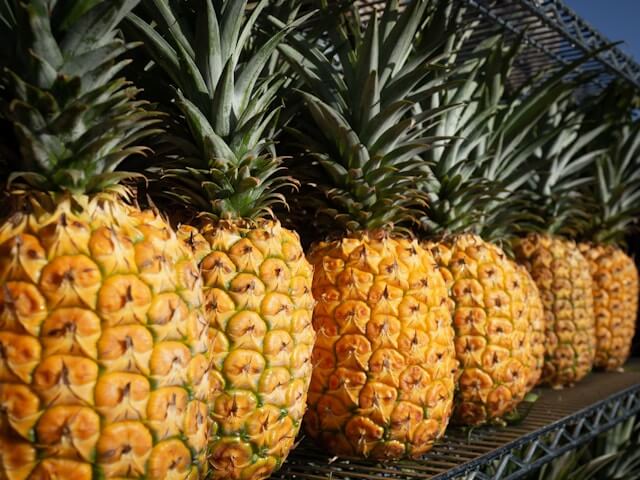
If you’ve noticed pineapples getting pricier at your grocery store or on your pizza, you’re not imagining it. There’s a global pineapple shortage stretching across fresh produce aisles and into the canned goods section. Most of it traces back to some seriously tough weather in the places where most of the world’s pineapples are grown especially Costa Rica and Thailand.
Let’s break down what’s going on, what it means for markets, and what could happen next.
What’s Causing the Pineapple Shortage?
A handful of problems have piled up at pretty much the same time. For starters, Costa Rica, which grows almost all the pineapples that end up in North America, ran into a string of weather disasters. The end of 2024 and beginning of 2025 hit growers with intense rains about 30% more than usual in some regions like Río Cuarto and Sarapiquí.
When you get that much extra rain, you can’t plant when you want, and the crops that are in the ground get stressed out. Wet conditions also attract pests and lead to plant diseases. The result? Fewer pineapples made it to harvest, and the ones that did were often smaller or lower-quality. Some farmers even reported entire fields wiped out by pests moving in after the rainstorms.
At the same time, Thailand, which is huge in the canned pineapple business, has been stuck in a drought rut for almost two years. Droughts slammed the region in both 2024 and into 2025. Production there is stuck between 710,000 to 830,000 tons a far cry from the country’s historical output. And the recovery? It’s slow. The numbers aren’t expected to bounce back much before 2026.
The pain doesn’t stop there. Vietnam is also struggling with local pineapple losses about the same time. In this case, the culprit is way too much rain, which leads to high humidity and root rot in the fields. So, even though Vietnam isn’t one of the top three global suppliers, it chips away at available supply even further.
Overall, global production data shows a real crunch. Even though big producers like Indonesia and the Philippines are still putting out solid numbers, total output was only around 29.6 million tonnes in 2023. Shortfalls in 2024 and 2025 have pushed available supply down at the exact time demand stays steady or even creeps up.
What’s Happening with Pineapple Prices?
Let’s talk dollars or euros, for that matter because the short supply is definitely hitting people in the wallet.
In North America and Europe, where most pineapples come from Costa Rica, tight supply means prices have rocketed. At the worst points, a box of Costa Rican pineapples hit nearly €15 in Europe. Even now, prices haven’t really returned to “normal,” with recent reports showing boxes going for €6.50 to €7.40. That’s still way above the typical price band.
A bit of an oddball twist Europe saw a flood of supersized pineapples earlier in the year due to the same wonky weather. So even when there are fruit on the market, the sizing can be off, making it trickier for retailers to sell at standard pricing or pack sizes.
It’s not just about fresh pineapples, either. The canned and processed pineapple market is also under pressure. With fewer fresh pineapples to can, processors are scrambling. The price for raw pineapples keeps rising, which trickles down into the cost of every can on the supermarket shelf.
One interesting bit here pineapple juice is also being used more as a swap for orange juice, which is in short supply due to citrus issues in Brazil and the U.S. This has led to even more pineapples being diverted to juice, which means even less available for canning. For you and me, that means higher prices in the juice aisle, too.
Looking ahead, most market forecasts predict that prices will stay high through 2026. If global production takes another hit say, another drought in Thailand or more heavy rain in Costa Rica prices could jump again.
Where Are Pineapples Coming from Now?
With the “big two” suppliers (Costa Rica for fresh, Thailand for canned) struggling, buyers are turning to other countries. It’s not quite a complete patch, but it helps.
Indonesia has actually managed to hold steady through all the chaos. Think of them as the backup quarterback reliable, consistent, but maybe not ready to win the whole game on their own. The country’s large plantations focus on exports and have stepped up when others dropped off.
The Philippines is another story of resilience. They cranked out over 3.1 million tons, keeping shipments strong to their main partners: China, Japan, and the U.S. Their growers have dodged many of the weather curveballs, at least so far.
Then, there are smaller but fast-growing players. Panama is making waves, with production up 30–40% every year. If you’re in the U.S., Canada, or Europe, you might actually be eating a Panamanian pineapple without noticing.
Vietnam’s not quite at the same level sitting at about 800,000 tons but it’s definitely ramping up. Lots of new land is going into pineapple, so their role could grow over time.
Kenya’s jumped in to serve Europe and the Middle East, especially during times when no one else is shipping. Production there hovers between 300,000 and 400,000 tons, which isn’t massive but helps smooth out lumpy supply.
Peru and Colombia have also nudged their way into the export game, especially with Golden variety pineapples. Colombia alone is around 919,700 tons, which is a big step up from just a few years ago.
What Are Companies (and Buyers) Doing About It?
This whole experience has been a bit of a wake-up call for buyers, importers, and food brands. For a long time, everyone counted on Costa Rica and Thailand to “handle it.” But weather keeps finding new ways to throw off a perfect supply chain.
Now, there’s more talk about diversifying where pineapples come from. That could mean new supplier contracts with countries like Panama or even more support for developing industries in Vietnam or Peru. The old playbook just waiting for the main countries to recover doesn’t seem so reassuring anymore.
Importers are also keeping a closer eye on long-term risks. Climate shocks aren’t going away. Each year brings something different. Now, more planning goes into considering how things like El Niño or La Niña will impact future harvests. If Costa Rica gets hit with another big rain season in 2025, or if drought drags out in Thailand, they need a Plan B.
Some retailers are switching up their product offerings, mixing fresh, canned, and juice products differently depending on what’s available. Others are warning customers that pricing and availability could shift month to month for a while.
Food makers and brands are hedging their bets, too. That means locking in long-term contracts with alternative suppliers even if that means accepting higher prices in the short-term to avoid worse shortages later.
If things go well, and production in Thailand or Costa Rica rebounds in a year or two, we might see imports jump again as buyers race to restock. For now, though, the scramble continues.
The Road Ahead: Can We Expect More Shortfalls?
Barring a miracle rebound in Thailand’s and Costa Rica’s fields, we’re likely in for a stretch of tight supply and strong prices. The recovery timelines are murky weather is hard to predict, and pineapple crops take time to ramp up or recover after stress.
The big takeaway here is that the world’s pineapple supply chain looks a lot more fragile than many realized. It only took two or three big weather swings to send ripples across every major market.
If you’re interested in the details of how global produce supply chains work, or want to follow changes as they happen, sites like The Business Deck keep close tabs on these shifts.
For now, though, every link in the chain from farm workers in Costa Rica dealing with rain-soaked fields, to processors in Thailand hoping for rain at the right time, to buyers in Europe or the U.S. is feeling the pressure.
An upside? This kind of shock forces everyone to plan better: looking closer at who grows what, where, and how, and spreading bets to avoid future shortages.
Bracing for the Next Chapter
In a nutshell, the global pineapple shortage is mostly about wild weather a mix of too much rain, too much heat, and the timing of both. Biggest impacts start in Costa Rica and Thailand, but ripple out everywhere.
Markets are working to find solutions, pulling in pineapples from anywhere they can, and paying more to lock down what they can get. Short of a surprise surge in supply, don’t expect prices to ease much through 2026.
Most folks growers, exporters, retailers sound a little more cautious than in the past. We might see tighter pricing, more creative sourcing, and a wider array of pineapple origins in stores soon.
If you’re a pineapple fan, this might just mean thinking twice before tossing that extra chunk on your next pizza. It’s not the end of pineapple as we know it, but it’s definitely time to pay attention to where your fruit is coming from and maybe try something new if prices keep climbing.
Also Read:
